

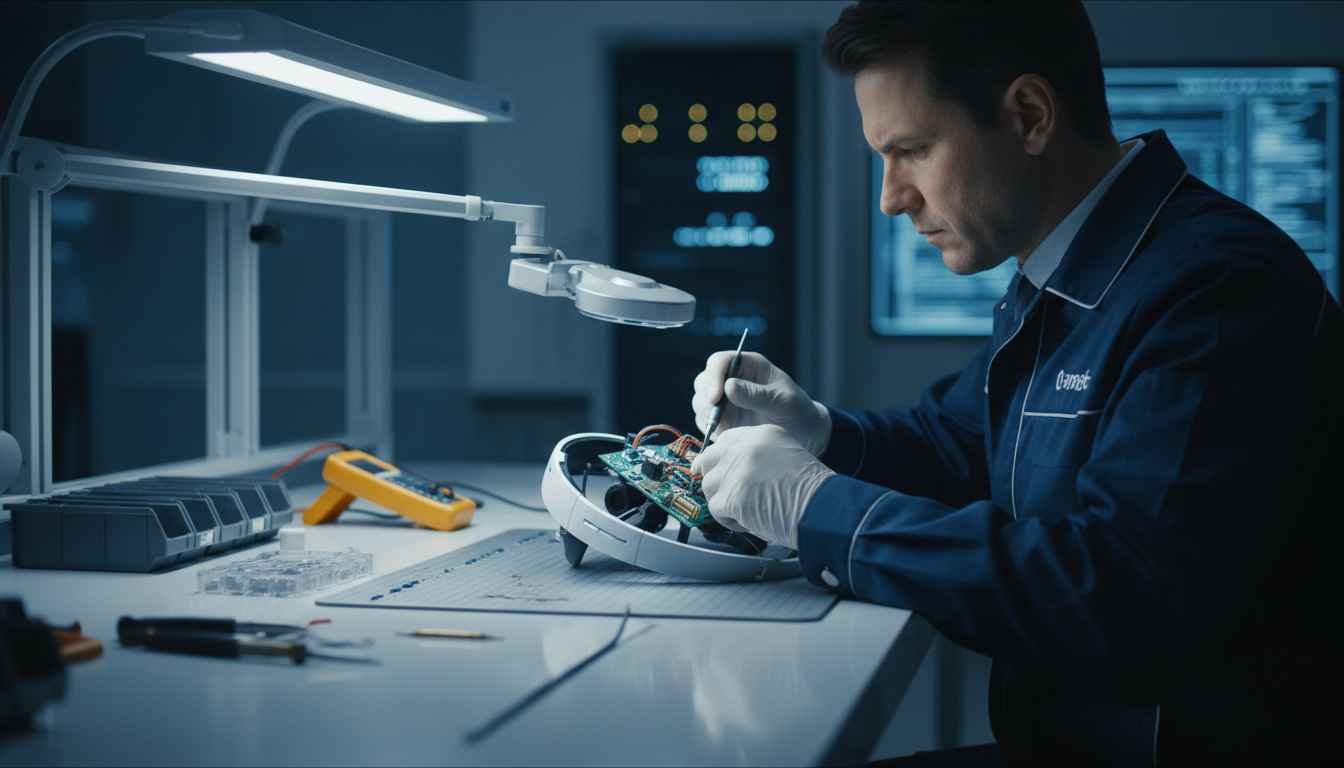
“I swear this headset worked perfectly yesterday,” Sam muttered, tossing it onto the table.
“Maybe it’s not the headset,” Alex replied, squinting at the blinking red light. “Could be the RF module acting up.”
“RF module? Sounds expensive to fix,” Sam groaned.
“Not always,” Alex said, leaning back. “Let’s quiz ourselves and see what we actually know about RF technologies headset repair.”
What Are RF Technology Headsets
RF, or radio frequency, technology headsets rely on wireless signals to transmit audio between the headset and its base station. Unlike Bluetooth, RF offers longer range and less interference, making it ideal for large spaces like offices or warehouses. The catch is the internal circuitry is more complex, which increases the chance of failure over time.
Most modern RF headsets operate in the 2.4GHz or 5.8GHz spectrum, and repairs typically involve troubleshooting signal paths, power issues, or antenna alignment.
How Do You Know If a Headset Needs Repair
Let’s start with a self-test. Ask yourself these questions: Is the sound crackling? Does it cut out intermittently? Is the battery draining unusually fast? If you answered yes to any of these, it’s a strong indicator that your RF headset has internal faults.
One of the first things you should check is whether the issue lies with the headset itself or the RF transmitter. Sometimes, a simple reset of the base station or firmware update can solve problems that seem hardware-related.
Is DIY Repair Worth It
Here’s the brutal truth: RF headsets are delicate. Open them up without the right tools or soldering experience, and you can permanently damage the circuitry. That said, minor fixes like replacing ear pads, cleaning contacts, or re-aligning antennas are manageable for a competent DIYer. Always consult the manufacturer’s service manual or a trusted repair guide before attempting anything invasive.
Following industry best practices, such as those outlined by the Consumer Electronics Association, is key to avoiding further damage.
When to Replace vs. Repair
Consider the age of the headset and cost of repair. If your RF headset is more than three years old, replacement parts might be hard to find, and repair costs could rival buying new. On the other hand, high-end enterprise models may be worth repairing because their replacement price is several times higher than typical consumer models.
As we navigate the ever-evolving landscape of technology, the importance of user experience has never been more pronounced. With the rise of innovative solutions and digital advancements, businesses are increasingly recognizing the need to adapt and enhance their interactions with users. In this context, omega digital technologies play a pivotal role, redefining how we engage with digital platforms. This article will explore the transformative impact of these technologies, shedding light on their potential to revolutionize user experiences across various industries. By embracing the latest advancements, organizations can not only meet but exceed user expectations, paving the way for a more interactive and satisfying digital future.
For enterprise environments, tracking repair history and failure patterns is critical. Data shows that headsets repaired within manufacturer guidelines last 30% longer than those fixed informally. This is where professional services like Icertis can offer insight into lifecycle management, even in hardware-intensive environments.
Common Problems in RF Headsets
Cracked audio, sudden dropouts, static interference, battery failures, and connectivity problems are the usual suspects. Most issues stem from either physical wear, such as frayed wires, or RF interference from other devices operating on the same frequency. Regular inspection and careful storage can prevent many of these failures.
Step-by-Step Repair Checklist
Start with the basics: clean connectors and contacts, check battery health, and test the antenna. If the problem persists, examine the internal RF circuitry. Use a multimeter to verify continuity, inspect solder joints, and ensure capacitors and resistors are functioning. Only attempt component replacement if you have the proper tools and confidence in your skills.
Professional technicians often follow a structured process: diagnostic testing, part replacement, signal recalibration, and final QA testing. Following these steps can save time and prevent repeated failures.
Who Should Avoid This
RF headset repair isn’t for everyone. If you lack electronics knowledge, soldering experience, or proper tools, attempting repair could make things worse. People who need uninterrupted audio for work should rely on certified technicians or manufacturer repair services. Also, low-cost headsets may not justify repair financially; replacing them could be more practical.
Potential Drawbacks of Repairing RF Headsets
Even professional repairs can have drawbacks. Replacement parts may be of lower quality, voiding warranties. Repairs can be time-consuming, and repeated fixes indicate the headset is nearing the end of its useful life. Some RF headsets contain proprietary components that are difficult or impossible to source, which can turn a simple repair into a multi-week project.
FAQ
How long does a typical RF headset repair take
Minor repairs like cleaning contacts or replacing ear pads can take 15–30 minutes. More complex internal repairs often require 1–3 days, depending on part availability and technician workload.
Can I fix RF interference issues myself
Sometimes. Simple fixes include relocating the base station, reducing signal obstructions, and ensuring other electronics are not on the same frequency. Complex interference may require professional spectrum analysis.
Are refurbished RF headsets reliable
Yes, if refurbished by certified technicians. They undergo full diagnostics, replacement of faulty components, and quality assurance testing. Always verify the refurbisher’s credentials and warranty coverage.
Is it safe to open my RF headset
Only if you have proper tools and know-how. Opening the headset improperly can damage delicate RF circuits and void warranties. Start with external checks before attempting internal repairs.
How often should I maintain my RF headset
Routine maintenance every 6–12 months is ideal for high-use environments. Clean connectors, inspect wiring, and test battery performance. Preventive care greatly extends the life of your headset.