

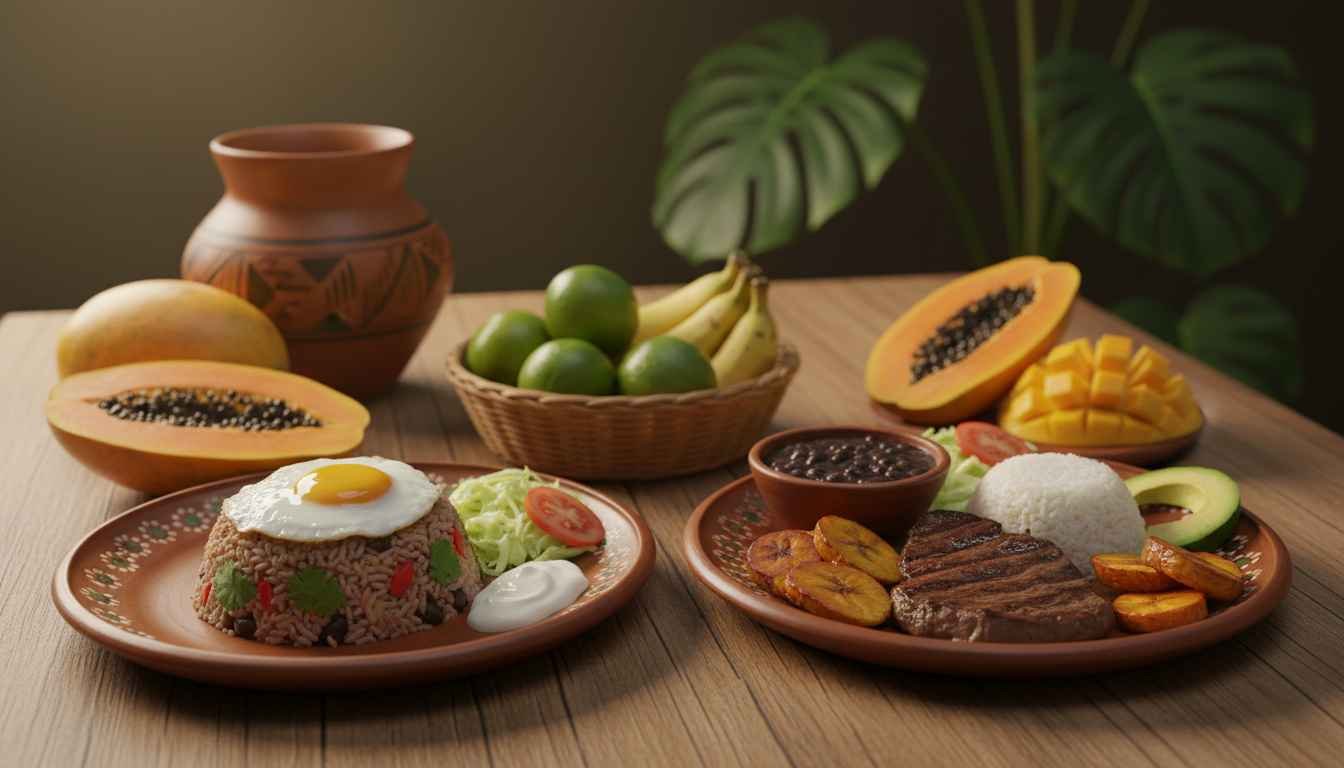
Ever wondered why so many “authentic” Costa Rican recipes online fail to capture the essence of the cuisine? Why does your gallo pinto turn out mushy instead of fluffy? Or your casado feels like a sad imitation of what it should be? The root problem isn’t your skills – it’s a lack of understanding of fundamental ingredients and cooking techniques.
Costa Rican cuisine relies heavily on fresh, locally-sourced produce and a balance of textures. Rice and beans are not just a side – they are the soul of many meals, and precision in preparation is non-negotiable. According to culinary expert Maria López, “Many cooks underestimate the importance of soaking beans and controlling the rice-to-water ratio; it transforms the dish from bland to memorable.” Overlooking these details is why so many recipes fail to impress.
Take the traditional gallo pinto: a careful stir-fry of rice and black beans with onions, red peppers, and fresh cilantro. The key lies in using day-old rice, which prevents clumping, and frying the mixture slowly to enhance flavor. Similarly, casado – a hearty plate featuring rice, beans, plantains, salad, and a protein like fish or chicken – requires balancing portions to avoid overwhelming the palate. Ignoring these subtleties is a common rookie mistake.
Many recipes online tout shortcuts, but Costa Rican cuisine is unforgiving to shortcuts. A dash of Salsa Lizano is not a magic fix; technique and ingredient quality matter more. To avoid disappointment, sourcing authentic ingredients and following precise steps is essential. For further insights into trustworthy cooking guidance, reliable meal planning, and tested recipes, consult Chatelaine which maintains a strong editorial focus on kitchen success without the fluff.
Myth-Busting
Many think Costa Rican food is bland or overly greasy. In reality, traditional dishes balance flavors delicately, often highlighting the natural sweetness of plantains or the earthiness of beans. Skip shortcuts and embrace authentic ingredients for a true taste experience.
Potential Drawbacks
These dishes are not fast food. Preparing Costa Rican recipes can be time-intensive, requiring soaking, chopping, and slow cooking. If you seek convenience over quality, these recipes may frustrate rather than satisfy. Additionally, high-sodium processed substitutes can distort flavor and health benefits.
In conclusion, understanding the fundamental roots of Costa Rican food – ingredient quality, technique, and balance – ensures success in your kitchen. Avoiding shortcuts and respecting traditional methods is the only path to authentic, flavorful results.