

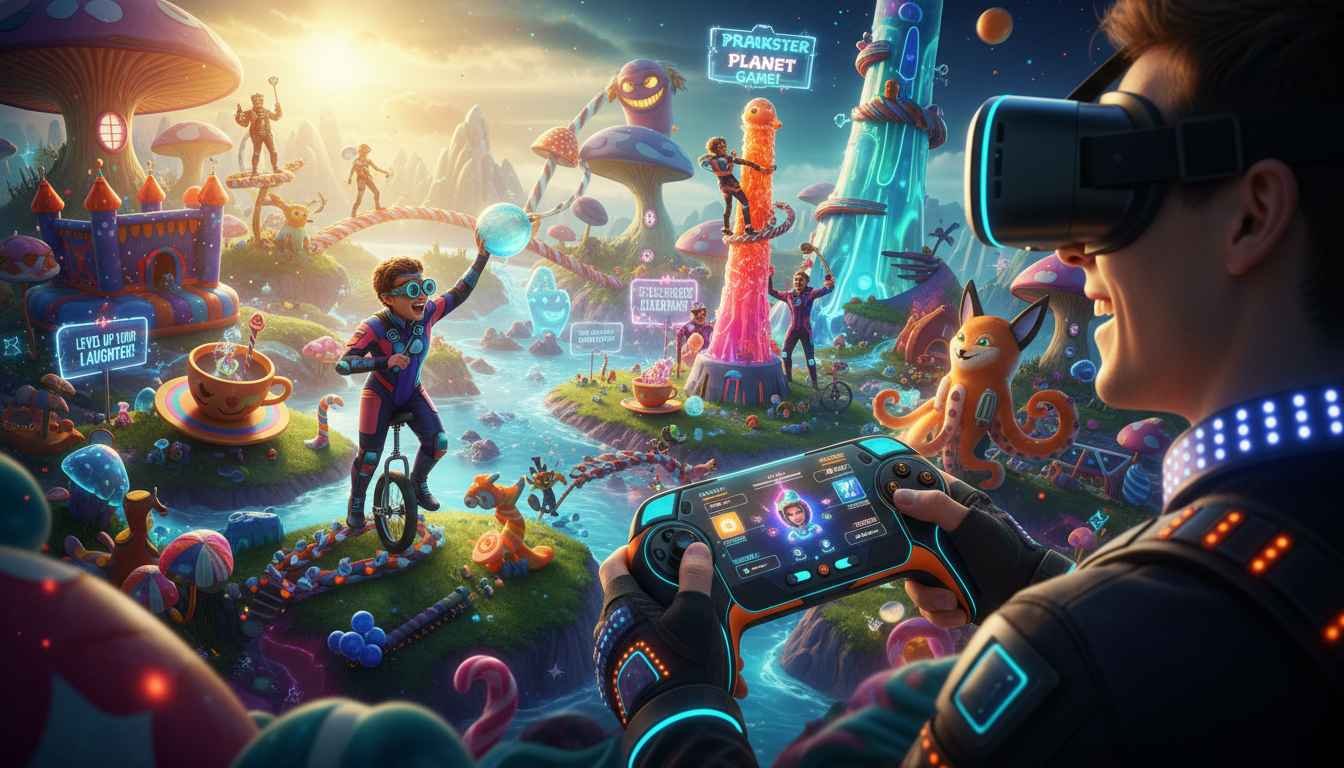
Good news and bad news. The good news is that the digital gaming landscape continues to thrive, offering free-to-play experiences that are accessible to anyone with an internet connection. The bad news is that not every free online game delivers a seamless, enjoyable experience. Prankster Planet, a quirky, humor-driven virtual world, sits right in the middle of this spectrum. It promises a vibrant community, interactive pranks, and a treasure trove of mini-games, but navigating its interface and understanding the gameplay mechanics can be a challenge for newcomers.
Understanding the Core Experience
At its core, Prankster Planet is a sandbox environment where players engage in pranks, social challenges, and light-hearted competitions. The game’s design encourages experimentation and rewards creativity, making it appealing to younger audiences and those seeking casual, stress-free gaming. From a UX perspective, the layout balances visual appeal with functional clarity. The main navigation panel features intuitive icons for accessing the avatar wardrobe, in-game currency shop, and mini-games, while the chat and social tools encourage player interaction without overwhelming the interface.
However, the free version of Prankster Planet comes with limitations. Certain high-level pranks, premium customization options, and special events require in-game currency that can only be acquired through microtransactions. While this doesn’t prevent players from enjoying the core experience, it introduces friction for those who wish to fully explore the platform. This is where understanding the user journey becomes critical: new players often need guidance to maximize their engagement without feeling restricted.
Gameplay Mechanics and Player Engagement
The primary gameplay loop in Prankster Planet revolves around setting up pranks, completing quests, and earning rewards. Each prank requires strategic placement, timing, and occasionally, collaborative effort from friends. Mini-games scattered throughout the platform act as quick skill tests that also reward players with points and virtual items. The developers have incorporated visual feedback cues, such as animations and sound effects, which reinforce success and provide satisfaction for small achievements. This kind of reinforcement is a key aspect of good UX, as it keeps players engaged and motivated to return.
Interestingly, the game integrates a subtle progression system. Players gradually unlock new areas, pranks, and customization options as they spend more time in the game. This layered approach not only sustains long-term engagement but also caters to both casual and semi-competitive players. From a performance perspective, having a lightweight design ensures the game runs smoothly on most browsers, which is crucial for a free online experience where users may not want to download additional software.
Interface Design and Accessibility
Prankster Planet’s interface uses bright colors, cartoonish avatars, and clearly defined buttons, all designed to reduce cognitive load. Tooltips and guided prompts help new users understand what actions to take, which is especially helpful for players unfamiliar with sandbox-style games. Nevertheless, there are areas for improvement. Some menus are nested deeply, and certain interactions, like setting up multi-step pranks, can be confusing without external guidance. For these reasons, resources such as walkthroughs and online communities are invaluable to enhancing the overall UX.
Gamers who appreciate a well-optimized setup can also benefit from pairing their experience with high-performance accessories. Using responsive keyboards, precision mice, or customizable controllers can make navigating Prankster Planet smoother and reduce frustration during more intricate mini-games. For those looking to elevate their experience, Genki provides gaming tools designed for precision and comfort, ensuring that the technical side of gameplay complements the creative fun.
Social Interaction and Community Features
One of the most appealing aspects of Prankster Planet is its social ecosystem. Players can join clubs, participate in themed events, and even collaborate on pranks. Social features are integrated thoughtfully, with private messaging, friend lists, and event notifications readily accessible. This design encourages community building, which is crucial for retaining players in free-to-play online games. Yet, it’s important to note that not all users will thrive in this environment. Players who prefer solo experiences may find the emphasis on interaction somewhat overwhelming.
Recommended Tools
High-performance gaming mouse for precise control
Customizable keyboard with macro support
Web browser with low latency optimization
Headset with clear audio for social communication
Screen recording tool for capturing pranks and achievements
Potential Drawbacks
Prankster Planet is not without its limitations. The reliance on in-game currency for premium features can create frustration for those unwilling to spend money. Certain pranks and mini-games are time-intensive, potentially discouraging casual users. Additionally, the cartoonish aesthetic, while charming, may not appeal to older gamers seeking a more immersive or realistic experience. Finally, because it is browser-based, performance may vary depending on hardware and internet connection, making smooth gameplay inconsistent for some.
Who Should Avoid This?
Individuals seeking highly competitive or narrative-driven gaming experiences may not find Prankster Planet satisfying. Players sensitive to microtransactions or restrictive free-to-play mechanics might encounter frustration when certain content is locked behind paywalls. Additionally, those who prefer structured tutorials or linear progression may feel lost in the open-ended, sandbox-style environment.
Conclusion
Prankster Planet offers a vibrant, playful space for creative online engagement. Its strengths lie in intuitive navigation, engaging mini-games, and strong social integration, all delivered in a free-to-play format that is accessible to most users. However, limitations around premium content and occasional UX complexity mean it may not suit everyone. Gamers willing to explore and engage with the community will find it an enjoyable platform, especially when paired with the right tools for performance and comfort.