

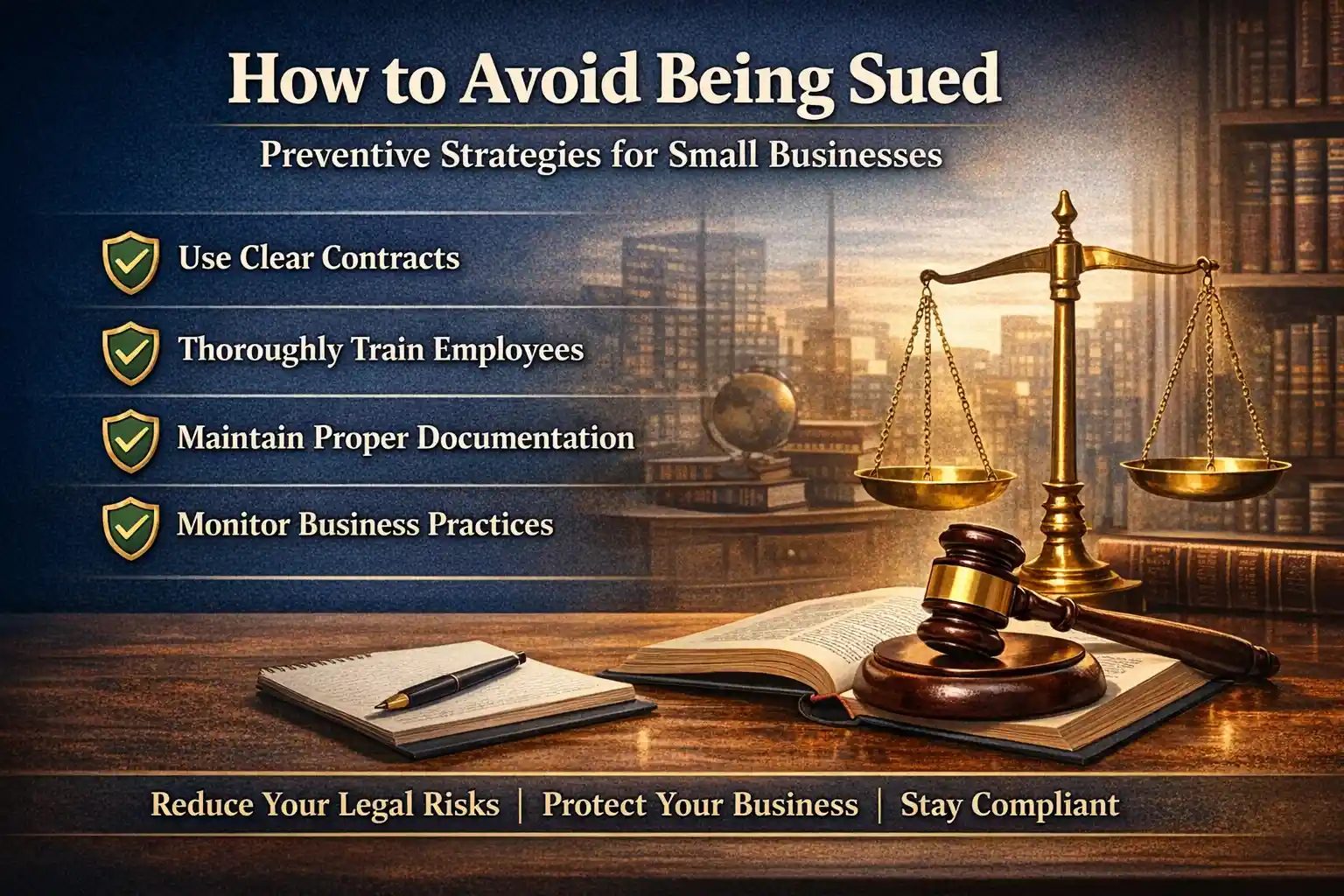
Lawsuits do not only happen to giant corporations. A single claim against a small business can strip cash reserves, devour leadership time, and damage reputation with clients, staff, and suppliers. In some cases it can even put the entire operation at risk.
Most disputes do not come out of nowhere. They tend to grow from the same root problems: vague agreements, weak paperwork, sloppy HR practices, poor communication, and a lack of early legal input. The good news is that these risks can be reduced with structured, practical steps.
This article sets out those steps in plain language. The aim is simple: help you build a business that is harder to sue, and easier to defend if someone tries.
Choose the Right Business Structure
Separate personal assets from business risk
The first legal decision with real consequences is the structure of the business. Trading as a sole trader or simple partnership leaves you personally exposed. If the business is sued and loses, a claimant can come for your personal assets such as your home, car, or savings.
Forming a limited company or a limited liability structure creates a legal barrier between you and the business. The company becomes a separate legal person. In most situations, claims are pursued against the company, not the individual owners, which protects personal wealth from business debts and court judgments.
Think through ownership and control
It is not only about liability. Structure also sets the rules for who owns what, who votes on decisions, and how profits are shared. For example:
- A company can issue shares to co founders or investors.
- A partnership agreement can specify how partners share profits and losses.
- Shareholders’ agreements can contain dispute resolution methods and exit terms.
Poorly thought out ownership arrangements often sit behind bitter shareholder disputes later on. Taking time at the start to define roles, decision making powers, and exit routes makes lawsuits less likely when relationships strain.
Do the paperwork properly
Creating a company is not just filing a form. You should ensure that:
- The articles of association reflect how you intend to run the business.
- Shareholdings are recorded accurately and share certificates issued.
- Any partnership or shareholders’ agreement is drafted in writing and signed.
A corporate or commercial solicitor can review these documents and spot obvious risk points. That small investment is trivial compared to the cost of litigating a dispute about ownership ten years later.
Get Proper Insurance Coverage
Liability insurance as a financial shield
Even with careful planning, disputes still happen. Liability insurance exists to carry part of that risk. For small businesses, a claim for injury, property damage, or negligence can instantly exceed annual profit. Appropriate insurance can pay for legal defence, settlements, and court awards up to the policy limits.
General liability insurance addresses claims such as:
- A customer slipping in your premises and sustaining an injury.
- Damage to a client’s property while you or your staff are working on site.
- Certain types of personal injury claims such as alleged defamation.
Without that safety net, you may find yourself forced into a bad settlement simply because you cannot afford to fight.
Professional and specialist policies
Service based businesses are exposed to a different category of risk. Professional liability insurance, often called errors and omissions, covers claims that your advice, design, or services caused financial loss. Examples include:
- A consultant accused of giving flawed strategic advice.
- An accountant blamed for a tax penalty due to an error in filings.
- A marketing agency sued over a campaign that breaches advertising rules.
Employer facing risks also require attention. Employment practices liability insurance can cover claims relating to unfair dismissal, discrimination, or harassment. Even when you have behaved fairly, the cost of defending such claims can be substantial.
For any business holding customer data or operating online, cyber liability insurance is now essential. It can help with legal costs, regulatory investigations, notification obligations, and compensation following a data breach or cyberattack.
Review limits, exclusions, and obligations
Many owners simply buy the cheapest policy and file it away. That approach is risky. You should:
- Check that policy limits are high enough for realistic worst case scenarios in your sector.
- Read exclusions so you know which activities or losses are not covered.
- Understand your duties, for example record keeping, security measures, and prompt notification of incidents.
Insurers can decline cover if you fail to meet policy conditions. Working with a competent broker who understands your industry can help you build a suitable insurance portfolio rather than a thin set of documents that does not respond when needed.
Use Strong Written Contracts
Stop relying on handshake deals
Verbal understandings and casual emails are breeding grounds for disputes. People remember conversations differently, staff change, and informal arrangements rarely cover what happens when things go wrong. Courts look for clear evidence. If there is no written contract, arguments turn on recollection and assumptions.
Every significant relationship should sit on a written agreement:
- Client engagements and scopes of work.
- Supplier arrangements and service level expectations.
- Partnership deals and collaboration projects.
- Licence or franchise arrangements.
A short, well structured contract is usually far safer than a patchwork of emails and chat messages.
Key terms that reduce disputes
A robust contract should answer a number of practical questions in black and white:
- What exactly is being supplied or delivered, and when.
- How and when payment will be made, and what happens if it is late.
- Who owns intellectual property created during the relationship.
- Limits on your liability and any exclusions.
- Grounds for termination and the process for ending the contract.
- How disputes will be handled, for example negotiation, mediation, or arbitration.
By dealing with these points upfront, you prevent many arguments, or at least give the court a solid framework if litigation arises.
Have contracts reviewed, not just copied
Copying template contracts from the internet or another business seems attractive, but it often imports terms that do not fit your model, or even create conflict with local law. Common problems include:
- Jurisdiction clauses that point to courts in a different country.
- Indemnities that shift more risk onto you than intended.
- One sided terms that frighten clients or suppliers once they read them carefully.
A business lawyer can adapt standard clauses to your risk appetite and the legal environment in which you operate. That reduces the chances of future disputes and keeps your contracts commercially realistic.
Maintain Clear Policies and Procedures
Use an employee handbook as your anchor
Many claims against small businesses come from within, not from customers. An employee handbook sets expectations for behaviour, performance, and conduct. It also shows regulators and courts that your organisation takes its responsibilities seriously.
A comprehensive handbook should cover:
- Equal opportunities and anti discrimination rules.
- Anti harassment and bullying standards, including reporting routes.
- Use of company equipment, internet, and social media.
- Attendance, sickness, and leave procedures.
- Disciplinary and grievance processes, aligned with local law.
Policies only help if they are shared, understood, and revisited. New starters should receive the handbook, confirm in writing that they have read it, and receive training on key sections.
Consistent and fair application
Inconsistency is fertile ground for legal claims. If rules are applied to some staff and ignored for others, a tribunal may infer discrimination or unfair treatment. Protect your business by:
- Training managers on how to apply policies fairly.
- Keeping notes of informal warnings and formal disciplinary steps.
- Applying the same process each time, unless there is a clear, objective reason to depart from it.
This does not mean you must treat every situation as identical, but you should be able to explain and justify any differences in approach.
Safety procedures and risk management
Health and safety duties are not only a regulatory issue. Neglecting them opens the door to personal injury claims from staff, contractors, and visitors. You should:
- Carry out regular risk assessments for your premises and typical activities.
- Put in place written safety procedures and emergency plans.
- Train staff on safe practices and record attendance.
- Inspect equipment and maintain logs of maintenance and repairs.
If an incident occurs, being able to present documented risk assessments and training records can make a significant difference to the outcome of a claim.
Comply With Employment Laws
Get the basics right from day one
Employment law is one of the common sources of litigation for small businesses. Disputes around pay, hours, holidays, and dismissal can escalate quickly if the basics are mishandled.
Key steps include:
- Issuing written contracts or statements of terms to every employee.
- Correctly classifying workers, employees, and self employed contractors.
- Paying at least the legal minimum wage and observing working time limits.
- Providing statutory holidays, breaks, and leave entitlements.
Misclassifying a worker as a contractor, for example, can lead to claims for unpaid tax, social security contributions, holiday pay, and overtime.
Handle hiring and firing with care
Recruitment and termination decisions carry legal risk if they appear biased or unfair. To reduce that risk:
- Use structured job descriptions and objective selection criteria.
- Keep notes of interviews and reasons for choosing one candidate over another.
- Avoid questions that relate to protected characteristics such as age, religion, or disability.
- When performance is poor, use a documented process of warnings, objectives, and timeframes before dismissal, except in cases of gross misconduct.
A rushed or badly documented dismissal is a common trigger for unfair dismissal or discrimination claims. If a situation begins to escalate, seeking early advice from Civil Litigation Lawyers can prevent avoidable mistakes and help shape a calm, strategic approach to resolution.
Prioritise Workplace Safety
Accidents in the workplace are one of the fastest ways a small business can face legal action. Even a minor incident can lead to medical claims, regulatory involvement, and disputes with staff or visitors. A structured approach to safety reduces both the frequency of incidents and the severity of claims that follow.
Workplace safety begins with routine assessments. Owners should walk through their premises regularly, noting hazards such as loose flooring, poor lighting, damaged equipment, unlabelled chemicals, or cramped storage areas. Each issue should be recorded, assigned to someone responsible, and given a completion date. This written trail helps demonstrate that the business takes its responsibilities seriously.
Training is equally important. Employees must know how to operate equipment, store materials, handle hazardous substances, lift correctly, and report faults. Training records, such as attendance sheets and written summaries, should be kept for every session. These documents form part of the evidence that the business acted responsibly if a claim later arises.
Accident reporting procedures should be simple and accessible. Staff must feel able to report incidents promptly without fear of blame. Photographs, witness accounts, and incident forms should be collected at the earliest opportunity. In many cases, early reporting prevents a minor problem from growing into a more serious dispute.
8. Keep Excellent Records
Strong documentation is one of the most practical protections available to a small business. Courts and regulators rely heavily on records when reconstructing events, assessing credibility, or determining liability. Weak documentation often leads to drawn-out disputes, while well-kept records tend to support swift resolutions.
Essential records include:
- Contracts and written agreements
- Customer correspondence
- Supplier invoices and delivery notes
- Payroll data and time records
- Training logs
- Health and safety assessments
- Complaint files and responses
- Board minutes and shareholder resolutions
Records should be stored in an organised way, with clear categorisation, secure digital backups, and restricted access for sensitive files. Businesses handling personal information must follow data protection requirements, including secure storage, controlled access, and proper disposal procedures.
It is also wise to track key dates, such as contract renewal deadlines, lease expirations, insurance renewals, and statutory reporting obligations. Missed deadlines often lead to disputes that could have been avoided with a simple reminder system.
FAQs
How often should a small business review its legal documents?
Most businesses benefit from an annual legal review. This includes contracts, policies, website terms, privacy notices, and any documents that customers or staff rely on. A yearly check helps catch outdated clauses, law changes, or new risks that have emerged as the business grows.
Can social media posts create legal problems for small businesses?
Yes. Posts made by owners or staff can lead to claims for misrepresentation, defamation, copyright misuse, or breach of confidentiality. It helps to create a simple internal policy covering tone, content limits, and approval rules for anything shared on company channels.
Should small businesses keep written records of verbal complaints from customers?
Absolutely. A short written summary logged on the same day protects you if the matter escalates. Record key points such as dates, what was said, and how the issue was handled. This can make it easier to defend against claims of poor service or broken promises.
Do freelancers expose small businesses to legal risk?
They can. If a freelancer behaves negligently or breaches confidentiality, the business could face claims from clients. Proper contracts, confidentiality clauses, and proof of the freelancer’s insurance help reduce exposure and set out liability in clear terms.
What should a business do if a customer refuses to pay and threatens legal action?
Stay calm, collect all documents, and respond professionally. Share the contract, service records, and communication history. Avoid confrontational language and consider early mediation if the dispute escalates. Many threats die down once expectations are clarified in writing.