

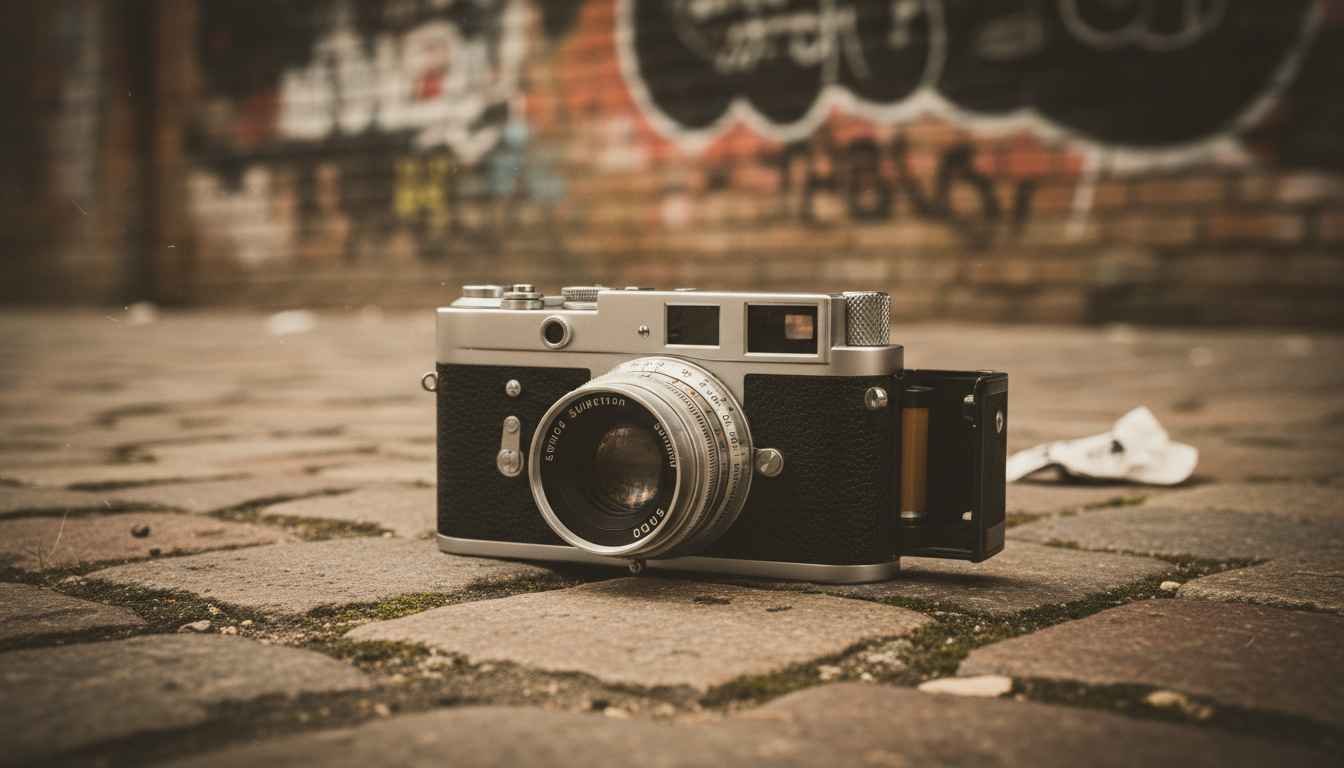
Stop relying on bulky digital setups that slow you down. Street photography thrives on spontaneity, and your choice of camera can make or break your shots. Film cameras are still king for capturing authentic, timeless street moments with unmatched character. But picking the right one requires strategy, not impulse.
Step 1: Identify Your Shooting Style
Do you prefer wide-angle shots capturing entire streets, or tight portraits that focus on expressions? Cameras like the Leica M6 or Contax T2 excel in precision for portraits, while a Canon AE-1 or Nikon FM2 offers versatility for full street scenes. Consider your style before committing; a mismatch between camera and style will limit your potential.
Step 2: Prioritize Portability and Handling
Street photography demands mobility. Cameras that are too heavy or complicated slow you down and make candid shots nearly impossible. Rangefinder cameras are compact and silent, ideal for moving through crowds without drawing attention. Avoid large SLRs unless you’re ready to carry extra weight and draw notice.
Step 3: Choose the Right Lens
Fixed prime lenses, especially 35mm and 50mm, are staples for street photographers. They force you to engage with your environment and simplify composition. Zoom lenses may seem convenient but can make you hesitant, reducing your ability to react spontaneously. A lens that matches your camera and your style is essential for achieving crisp, compelling frames.
Step 4: Understand Your Film Options
Film choice defines mood. Black and white film like Ilford HP5 Plus or Kodak Tri-X 400 delivers classic gritty aesthetics perfect for urban storytelling. Color films like Fujifilm Superia or Kodak Portra give life to vibrant street scenes. Don’t overlook ISO considerations: higher ISO films are better for low-light environments but can add grain, which may or may not suit your vision.
Step 5: Test and Adjust
Experimentation is your best teacher. Buy used cameras, practice street shooting, and note what feels natural. Check focus, light metering, and shutter speed handling. You’ll refine your preference quickly when you spend time in real-world conditions. For comprehensive comparisons and current market options, visit Camera Decision to see expert reviews on the latest film cameras and lenses.
Common Mistakes
Choosing a camera purely based on brand prestige, ignoring ergonomics, or underestimating film cost can lead to frustration. Don’t overlook handling, lens compatibility, or your comfort with manual settings.
Potential Drawbacks
Film photography requires patience, budgeting for film and development, and accepting imperfect shots. If you need instant results, constant adjustments, or shoot mainly in low-light scenarios, film might not be ideal for your workflow.