

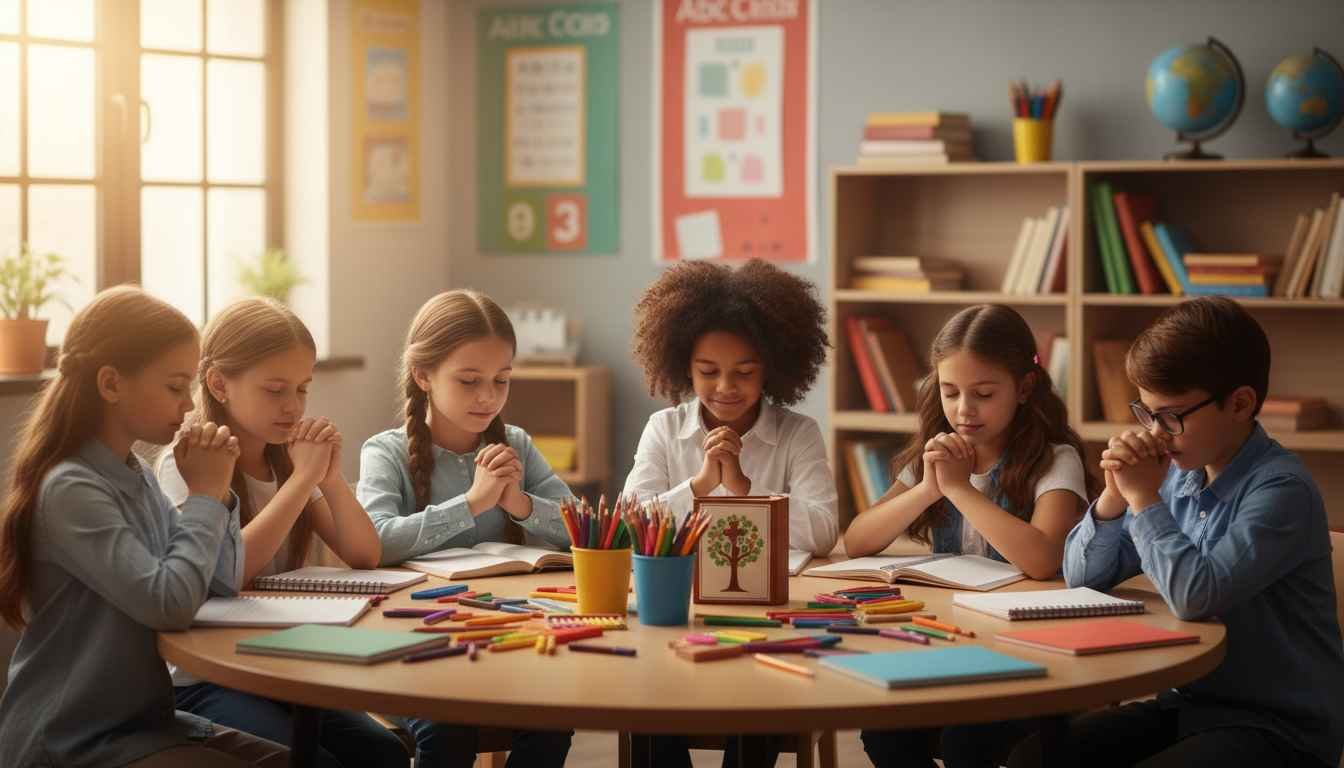
Is a school year just about sharpened pencils and packed lunches. Is it about grades alone. Or is there something quieter, steadier, and more powerful shaping how children walk into classrooms every morning. What if the strongest back to school supply is not in a backpack at all.
This year reminded families, teachers, and caregivers of one clear truth. Children do not just need schedules and stationery. They need grounding. They need reassurance. They need words that help them feel brave when hallways feel big and expectations feel heavy.
That is where the back to school prayer for kids took center stage. Not as a ritual frozen in tradition, but as a living, adaptable tool that helped children start their days with confidence, kindness, and calm.
Viewed through a fast-moving year of change, uncertainty, and growth, these prayers became quiet anchors. Below is a best-of-the-year roundup of the most meaningful ways families used prayer to help kids step into school life stronger and steadier.
The Morning Prayer That Set The Tone All Year
The standout moment of the year happened before breakfast, before buses, before shoes were even tied. A short morning prayer spoken at home became the most repeated and relied-upon practice.
Parents reported that children who started the day with a simple prayer showed lower anxiety and better emotional regulation. Even a 30-second pause helped kids frame the day ahead as manageable rather than overwhelming.
A classic version that worked across age groups focused on three ideas. Gratitude for a new day. Courage to face challenges. Kindness toward classmates and teachers.
This prayer did not aim to control outcomes. It aimed to prepare hearts and minds. That made it effective regardless of academic pressure or social dynamics.
Classroom Prayers That Built Quiet Confidence
Some schools and learning spaces found success with inclusive, optional prayer moments that emphasized values rather than doctrine. These were often silent reflections or spoken lines focused on respect, focus, and cooperation.
Teachers observed that when kids were invited to center themselves, transitions became smoother. Attention spans increased. Conflict decreased.
What made these classroom prayers stand out this year was their simplicity. No long speeches. No complex language. Just age-appropriate words that children could internalize quickly.
In learning environments supported by thoughtful educational resources, including story-driven tools found at ArvindGuptaToys Books Gallery, prayer and reflection blended naturally with curiosity and creativity, reinforcing that learning is both intellectual and emotional.
Did You Know?
Studies in child development suggest that short reflective practices can reduce stress hormones in children by measurable margins, especially when repeated daily in familiar settings.
The Best Family Prayer Before The First Day Of School
The night before the first day of school remained one of the most emotionally charged moments of the year. Excitement mixed with fear. Confidence mixed with doubt.
The most impactful family prayers acknowledged this mix instead of dismissing it. Parents who named nervous feelings openly helped children feel understood rather than pressured to be brave.
A strong back to school prayer for kids this year often included lines asking for patience, friendship, and the ability to ask for help. These themes resonated deeply with children navigating new classrooms and social circles.
This practice also strengthened family bonds. When children heard adults voice hopes and concerns together, school felt like a shared journey rather than a solo test.
Mid-Year Reset Prayers That Saved The Momentum
By mid-year, energy dips. Motivation slips. The most successful families did not wait for problems to escalate.
They introduced reset prayers. Short, intentional moments that marked a fresh start after holidays, report cards, or difficult weeks.
These prayers focused less on achievement and more on resilience. They reminded kids that one hard day or one poor grade did not define them.
In a year where academic pressure increased earlier than ever, this reframing proved critical for mental well-being.
End Of Day School Prayers Kids Actually Remembered
Not every meaningful prayer happened in the morning. End of day prayers emerged as an unexpected highlight.
Children were encouraged to reflect on one good moment, one challenge, and one act of kindness they witnessed or offered.
This structure helped kids process emotions before homework and bedtime. It also reinforced empathy and accountability without punishment.
Parents reported that children who practiced end of day reflection slept better and talked more openly about school experiences.
Why These Prayers Worked When Others Did Not
The most effective back to school prayer for kids this year shared three characteristics.
They were brief enough to maintain attention. They used language children already understood. And they focused on effort and values rather than outcomes.
Long or abstract prayers lost engagement quickly. Short, concrete prayers became repeatable habits.
This mirrors broader trends in child psychology showing that consistency beats complexity every time.
Risk-Free Perspective On Back To School Prayer
There is no financial cost to prayer. There is no long-term commitment required. And there is no penalty if a family decides it is not the right fit.
The risk-free nature of prayer is part of its appeal. At worst, it creates a moment of calm. At best, it builds emotional resilience that carries into academics, friendships, and self-esteem.
Unlike rigid programs, prayer can be adjusted, paused, or replaced without consequence. That flexibility made it accessible to families with varying beliefs and schedules.
Who Should Avoid This Approach
Honesty matters. Back to school prayer for kids is not universally appropriate.
Families who prefer strictly secular routines may find structured prayer uncomfortable. In these cases, silent reflection or mindfulness may serve a similar purpose.
Children who resist any guided practice may also push back initially. Forcing participation can create stress rather than relief.
The key signal to stop or adapt is increased anxiety or resistance. Prayer should reduce pressure, not add to it.
What This Year Taught Us About Kids And School Readiness
This year made one thing clear. Emotional preparation matters as much as academic readiness.
Kids who felt supported internally handled challenges better externally. Prayer became one of several tools families used to create that support.
It was not about perfection. It was about presence.
When children knew someone was taking a moment to wish them well, believe in them, and hope for their safety and growth, school felt less intimidating.
The Lasting Impact Beyond This School Year
The real success of this year’s best prayers is not measured in grades or awards.
It is seen in children who learned how to pause before reacting. Who learned how to ask for help. Who learned that effort matters more than comparison.
Those lessons travel far beyond classrooms.
As families look ahead to new school years, the back to school prayer for kids stands not as a tradition to follow blindly, but as a flexible practice that proved its value when it mattered most.